

Can NRIs Sell or Rent Out Indian Property? Here's What the Law Says Housinginindia.com

What This Guide Covers

The Indian real estate market continues to attract interest from Non-Resident Indians (NRIs), whether as long-term investors or former residents holding ancestral property. But when it comes to selling or renting out property in India, NRIs often find themselves entangled in complex legal rules, tax obligations, and banking formalities.

Confident Property Buyers Housninginindia.com

This blog is a simplified, updated guide that answers the most crucial questions:

  • Can NRIs legally sell residential or commercial property in India?

  • Are there restrictions on renting it out to tenants?

  • What about taxes, FEMA regulations, or repatriating the money earned abroad?

We’ll break down what the law says—especially under the Foreign Exchange Management Act (FEMA) and relevant income tax rules—to help you avoid common pitfalls.

Whether you’re an NRI planning to sell a flat in Delhi, rent out a commercial unit in Bangalore, or transfer sale proceeds abroad, this blog will help you understand your rights and responsibilities. Plus, we’ll provide expert tips and checklists to make sure your transaction is compliant and hassle-free.

So, if you’re unsure about the legalities of managing your Indian property from overseas, you’re in the right place.

What Types of Properties Can NRIs Sell or Rent Out?

NRIs enjoy similar property rights in India as resident Indians—with a few notable restrictions. The type of property you hold plays a crucial role in determining whether you can sell or lease it legally.

 What Types of Properties Can NRIs Sell or Rent Out? housinginindia.com

Properties NRIs Can Freely Sell or Rent:

  1. Residential Property

    • You can sell your apartment, flat, bungalow, or house to an Indian resident, another NRI, or a Person of Indian Origin (PIO).

    • You can also rent it out without restriction—either long-term lease or short stays—subject to income tax compliance.

  2. Commercial Property

    • Office spaces, shops, warehouses, and commercial plots can be sold or leased without any legal hurdle to Indian residents, NRIs, or PIOs.

    • Rental income from these is fully allowed under FEMA rules.

Property NRIs Cannot Sell or Buy:

  • Agricultural Land, Plantation Property, and Farmhouses

    • NRIs cannot purchase such land, even if they inherit it.

    • While you may inherit agricultural property, you cannot sell it to another NRI or PIO—only to an Indian citizen who is a resident.

Important Notes:

  • If the property is jointly held with a resident Indian or inherited through a will, additional documentation may be required during the sale process.

  • Always ensure clear title, mutation, and registration records before initiating sale or rent, especially if the property has been unoccupied for years.

Understanding the category of your property is the first step in navigating the legal landscape confidently. The next section will explain how FEMA governs the sale and rental process for NRIs in India.

Legal Rights Under FEMA (Foreign Exchange Management Act)

For NRIs, property transactions in India—especially selling or renting—are governed by the Foreign Exchange Management Act (FEMA). This law ensures all cross-border dealings are tracked and compliant with India’s financial regulations.

NRI Signing FEMA Document Housinginindia.com

What FEMA Allows NRIs to Do:

  • Sell residential or commercial property to:

    • An Indian citizen living in India

    • Another NRI or Person of Indian Origin (PIO)

  • Rent out any legally owned residential or commercial property and earn income in India

  • Repatriate sale or rental proceeds overseas, provided certain conditions are met (discussed in later sections)

However, FEMA does not permit NRIs to:

  • Buy or sell agricultural land, plantation property, or farmhouses

  • Sell inherited agricultural property to other NRIs or PIOs (can only sell to Indian residents)

📄 Key FEMA Conditions for Property Sale or Rent:

  • The property must be legally acquired as per FEMA norms—either purchased, inherited, or received via gift.

  • The sale proceeds must be routed through banking channels and can only be credited to the NRO account.

  • Repatriation is allowed up to USD 1 million per financial year, subject to tax compliance.

RBI & Authorized Dealers:

You don’t need prior RBI approval for sale or rent—but your transactions must be reported and routed via authorized dealer banks. This ensures legitimacy and prevents penalties.

Understanding FEMA is critical to ensure your sale or rent process doesn’t attract legal issues. Up next, we’ll walk you through the exact step-by-step legal process for selling your property as an NRI.

Selling Property: Step-by-Step Legal Process for NRIs
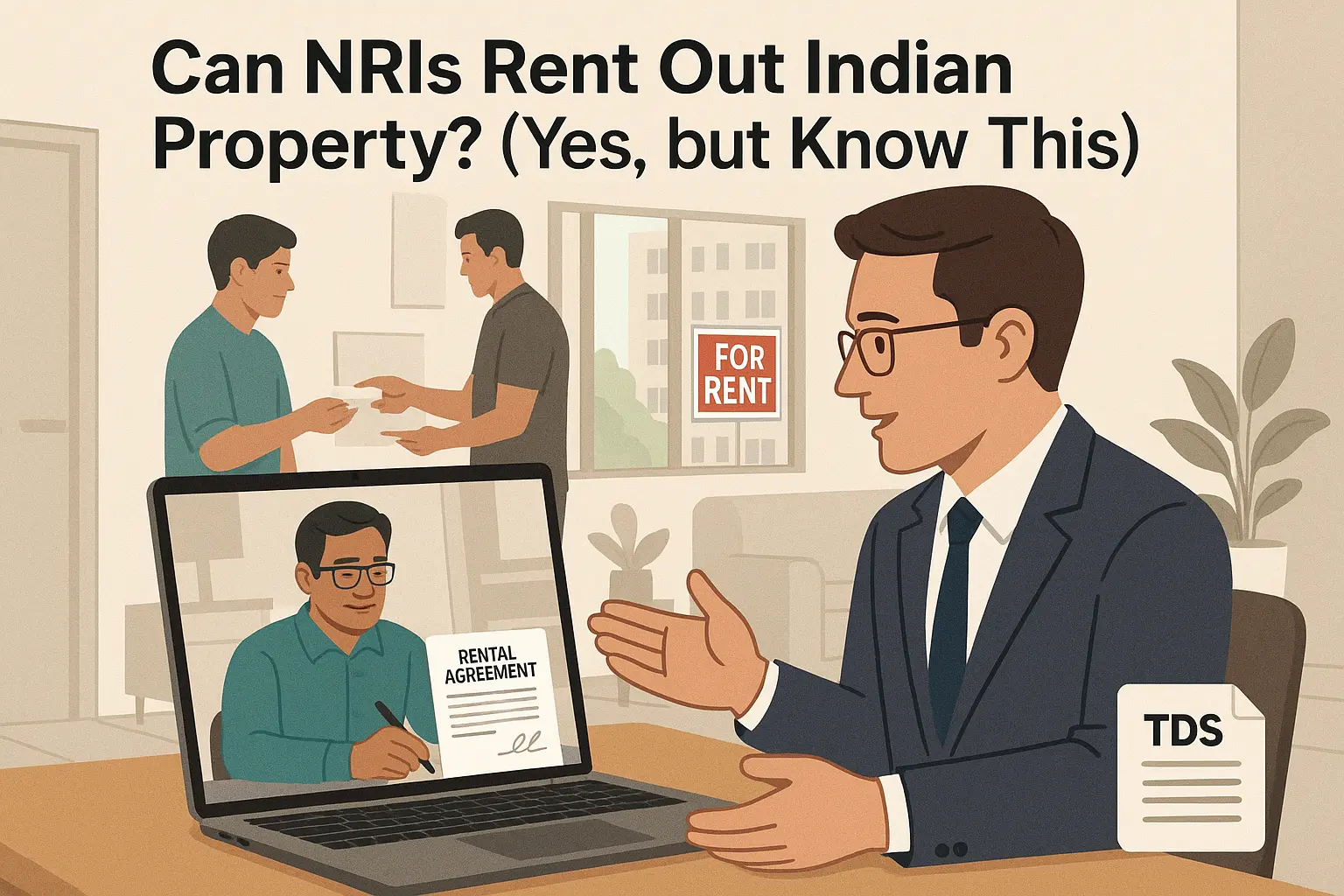
 NRI Property Rental Management Housinginindia.com

Selling property in India as an NRI is completely legal—but it must follow a clearly defined process to remain compliant with Indian laws and FEMA regulations. Here’s a step-by-step breakdown to help you avoid delays, rejections, or tax issues.

Step 1: Ensure Clear Legal Title

Before initiating any sale, verify that the title of the property is in your name. If the property is inherited, make sure the mutation, succession certificate (if applicable), and legal heir documentation are complete.

Step 2: Gather All Mandatory Documents

  • PAN Card (mandatory for all property transactions)

  • Sale Deed and earlier title deeds

  • Passport and OCI/PIO Card (if applicable)

  • Proof of address (Indian and overseas)

  • Encumbrance Certificate

  • Tax receipts and utility bill clearance
    If a Power of Attorney (PoA) is acting on your behalf, notarized and consular-attested PoA documents must be ready.

Step 3: Find a Buyer

NRIs can sell to:

  • Indian citizens

  • Other NRIs or PIOs (for residential/commercial properties only)

You may list the property through a broker, legal agent, or real estate platform.

Step 4: Draft and Register the Sale Agreement

  • A legal sale agreement is signed detailing the payment terms, handover timeline, and other conditions.

  • The final Sale Deed must be registered at the local sub-registrar office where the property is located.

  • Both buyer and seller (or their PoA holders) must be present with original documents.

Step 5: Receive Payment Legally

  • Funds must be received through Indian banking channels (RTGS/NEFT/cheque).

  • The payment must be credited to your NRO account in India.

Step 6: Pay Capital Gains Tax

If the property is sold after 2 years of holding, Long-Term Capital Gains (LTCG) at 20% with indexation will apply.

  • TDS at 20% is deducted by the buyer (plus surcharge and cess).

  • You may apply for a lower TDS certificate from the Income Tax Department in advance if eligible.


Step 7: Repatriate Funds (Optional)

Once the sale is complete and tax is paid, you may repatriate up to $1 million per financial year through your authorized bank, after submitting Form 15CA & 15CB.

Can NRIs Rent Out Indian Property? (Yes, but Know This)

Yes, NRIs are legally allowed to rent out both residential and commercial property in India—without any special permission from the RBI. Rental income is considered a legitimate source of income for NRIs under Indian law, but it comes with a few legal and tax-related obligations.
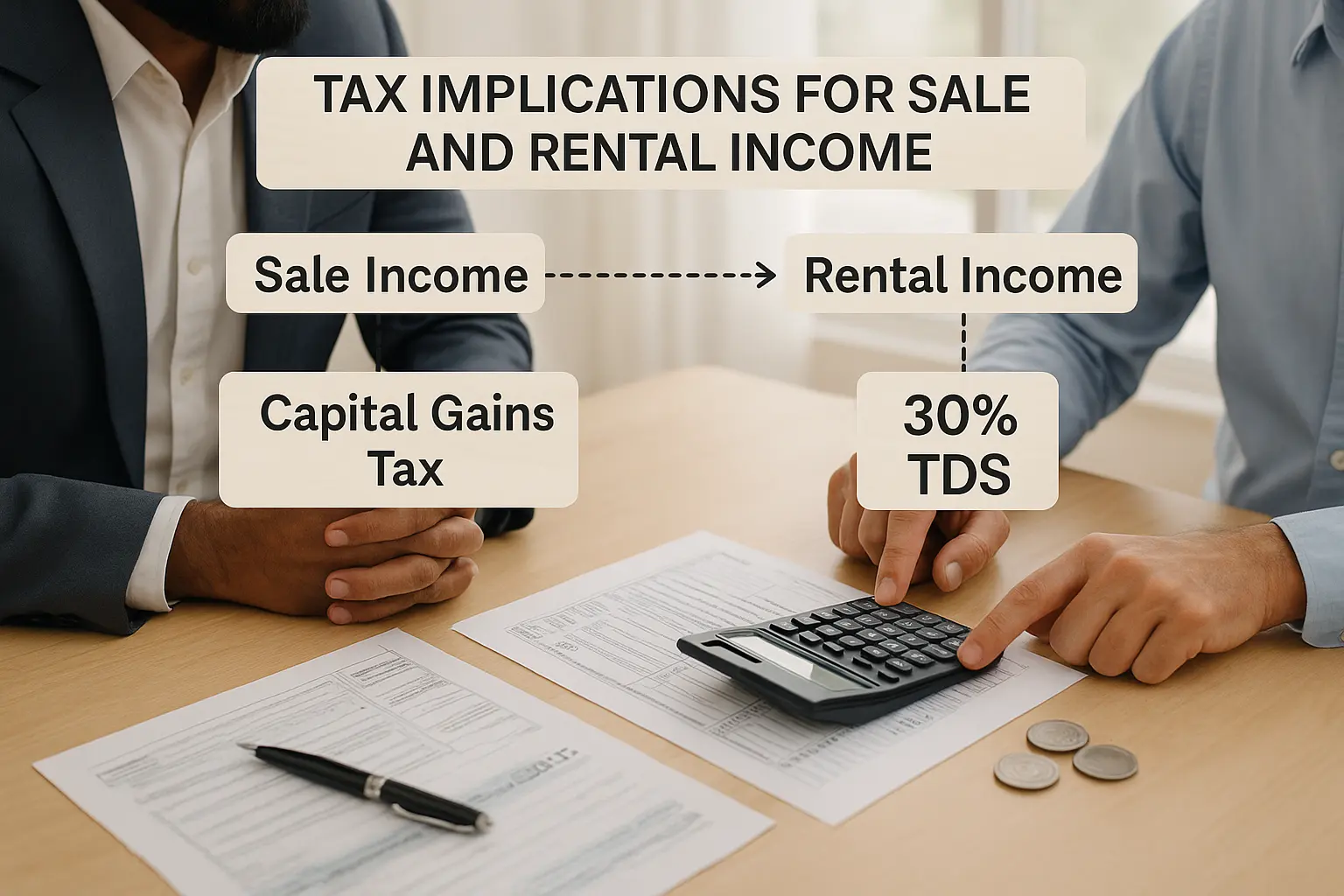
Tax Income Flowchart Housinginindia.com

What’s Allowed?

  • Types of Properties You Can Rent:

    • Residential apartments, flats, houses

    • Commercial spaces like offices, shops, showrooms

  • Who Can Be the Tenant?

    • Indian residents

    • Businesses and companies operating in India

You can lease out the property for any duration under a registered rental agreement. Ensure the rental contract complies with the applicable state rental laws.

Rental Income and TDS (Tax Deducted at Source)

Under Indian tax laws, rental income received by an NRI is taxable at 30% (plus cess and surcharge). The tenant is legally required to:

  • Deduct 30% TDS before transferring the rent

  • Deposit the TDS with the Income Tax Department under your PAN

  • File Form 15CA if rent is paid to your overseas account

If the tenant fails to deduct TDS, you (the NRI) may be held liable during scrutiny.

How to Receive Rent Payments:

  • The rent should be deposited into your NRO bank account in India.

  • You can later repatriate rental income abroad, after paying applicable taxes and filing Form 15CA/15CB.

Pro Tips:

  • Mention your NRI status and PAN clearly in the rent agreement.

  • For long-term leases, get the rental agreement registered.

  • Hire a local property manager or trusted representative if you’re managing the lease remotely.

Tax Implications for Sale and Rental Income

Whether you’re selling your Indian property or renting it out, as an NRI, you are liable to pay applicable taxes under Indian law. Many NRIs overlook this step—only to face complications later while repatriating funds or during income tax scrutiny.

Role of Power of Attorney (PoA) for NRIs Housinginindian.com

Let’s simplify the tax responsibilities in both scenarios:

1. Tax on Sale of Property

Capital Gains Tax:

  • Short-Term Capital Gains (STCG):
    If the property is sold within 2 years of purchase, the profit is taxed as per your slab rate (usually 30% for NRIs).

  • Long-Term Capital Gains (LTCG):
    If held for more than 2 years, the gain is taxed at 20% with indexation benefits.

TDS Deduction:

  • The buyer must deduct TDS at:

    • 20% on LTCG

    • Slab rate on STCG (usually 30%)

    • Plus applicable surcharge and cess

  • TDS is deducted on total sale value, not just gains, unless a lower/nil TDS certificate is obtained in advance from the Income Tax Department.

Tax Rebate:

You may save capital gains tax under Section 54 or 54EC if you reinvest in another property or NHAI/REC bonds, respectively.

2. Tax on Rental Income

  • Rental income earned in India is fully taxable in India, regardless of where you live.

  • Tenants must deduct 30% TDS and deposit it against your PAN.

  • You must file your income tax return in India to declare rental income and claim deductions under Section 24 (standard 30% deduction + home loan interest).

Double Taxation Relief

If your resident country has a Double Taxation Avoidance Agreement (DTAA) with India (like USA, UK, Canada, UAE), you can:

  • Avoid paying tax twice on the same income

  • Claim credit in your home country for the tax paid in India

Income Type Tax Rate TDS by Buyer/Tenant Deductions Available
Rental Income 30% Yes – by tenant 30% standard + interest
ST Capital Gains As per slab (30%) Yes – by buyer Section 54F or 54EC
LT Capital Gains 20% (with indexation) Yes – by buyer Section 54 or 54EC bonds

Taxes may seem like a hurdle, but with advance planning, proper documentation, and expert help, you can minimize liability and stay 100% compliant.

Up next, we’ll explain how NRIs can legally repatriate sale or rental income abroad—including forms, limits, and banking routes.

How to Repatriate Sale/Rental Proceeds Overseas

Once you’ve sold or rented out your property in India and complied with all tax obligations, the next question is: Can you send that money abroad?
The answer is yes—but only if you follow the proper banking, tax, and FEMA protocols.

Here’s how to do it legally and efficiently:


Repatriation Rules for NRIs

Under FEMA, NRIs are allowed to repatriate up to USD 1 million per financial year (April–March) from their NRO account, provided the following conditions are met:

  • The funds are from legitimately acquired assets (property sale, rent, inheritance).

  • All Indian taxes have been paid on the proceeds.

  • Repatriation is done through authorized dealer banks only.

Required Documents for Repatriation

To repatriate funds, you’ll need to submit:

  1. Form 15CA – Declaration of remittance submitted online via the Income Tax portal.

  2. Form 15CB – Certificate from a Chartered Accountant confirming that applicable taxes have been paid.

  3. PAN Card – Mandatory for all NRI financial transactions.

  4. Sale Deed / Rent Agreement – As proof of income source.

  5. Bank’s Repatriation Request Form – Each bank has its own format.

Step-by-Step Repatriation Process

  1. Deposit the money into your Indian NRO account.

  2. Consult a CA to prepare Form 15CB (based on tax proof).

  3. Submit Form 15CA online through the income tax website.

  4. Share both forms with your bank’s NRI desk along with the repatriation request.

  5. The bank will process the transfer to your foreign bank account.

Key Points to Remember:

  • Funds must be non-borrowed and fully tax-paid.

  • Repatriation is not allowed from NRE accounts for sale proceeds—only from NRO accounts.

  • For joint properties, each co-owner gets a separate USD 1 million repatriation limit.

Repatriating your Indian income isn’t as complicated as it sounds—if your paperwork is in order. Always keep digital and hard copies of every form submitted for future reference.

Next, we’ll discuss the importance and legal scope of Power of Attorney (PoA) for NRIs managing property from abroad.

Role of Power of Attorney (PoA) for NRIs

Final Checklist

Managing property in India from thousands of miles away can be challenging. This is where a Power of Attorney (PoA) becomes an essential legal tool for NRIs. It allows a trusted individual in India to act on your behalf for property-related activities like selling, renting, registering documents, and handling banking formalities.


What Is a Power of Attorney?

A Power of Attorney is a legal authorization that grants someone (usually a relative, lawyer, or property manager) the right to represent you in legal and financial matters concerning your Indian property.

There are two main types:

  • General PoA – Covers a wide range of actions including buying, selling, leasing, managing, and collecting rent.

  • Special PoA – Limited to a specific transaction (e.g., registering a sale deed or collecting rental income).


How Can NRIs Create a Valid PoA?

  1. Draft the PoA clearly stating the scope, rights, and limitations.

  2. Get it notarized in the country where you’re residing.

  3. Attest it at the Indian Consulate/Embassy in your foreign country.

  4. Send it to India, where it must be adjudicated (stamped) at the local registrar office in the state where the property is located.

Only after this process is complete, the PoA becomes valid for legal use in India.


What Can a PoA Holder Do?

  • Sign property sale deeds

  • Register rent agreements

  • Receive payments on your behalf

  • Represent you before authorities and sub-registrars

  • Submit TDS, PAN, and tax forms

Note: The PoA holder cannot repatriate funds abroad unless authorized by a special clause.


Caution for NRIs:

  • Choose someone you completely trust.

  • Always limit the validity and scope to prevent misuse.

  • Avoid using outdated or generic PoA formats—get it professionally drafted.

Using a well-defined Power of Attorney can save NRIs from expensive travel and legal delays. But misuse of PoA is one of the top causes of property fraud, so vigilance is key.

Coming up: We’ll highlight common mistakes NRIs make when selling or renting property in India—and how to avoid them.

Common Mistakes NRIs Make – And How to Avoid Them

Even though Indian laws allow NRIs to sell and rent property with relative ease, many still face delays, financial losses, or legal trouble—not because of the law, but due to oversight or incorrect execution.

Here are the most frequent errors NRIs make—and how to steer clear of them:


1. Not Obtaining a PAN Card

Many NRIs believe they don’t need a PAN card in India. However, a PAN is mandatory for all property transactions, including sale, rent, and tax filings.

Solution:
Apply for a PAN online or through a consulate service before initiating any transaction.


2. Ignoring TDS Deductions

Buyers and tenants are legally required to deduct TDS when paying an NRI. Many NRIs forget to communicate this or accept payments without TDS, which later creates compliance issues.

Solution:
Educate your buyer/tenant about TDS responsibility. Also, consult a CA for a lower or nil TDS certificate, if applicable.


3. Using an Invalid or Poorly Drafted PoA

NRIs often rely on outdated or vague Power of Attorney documents, which can be rejected by authorities or misused by the holder.

Solution:
Always notarize and consulate-attest your PoA. Clearly define its scope and duration to protect your interests.

4. Repatriating Funds Without Compliance

Transferring proceeds from property sale or rent abroad without following FEMA and Income Tax norms may result in penalties and transaction rejections.

Solution:
Route funds through your NRO account, and always submit Form 15CA/CB with help from a chartered accountant.


5. Not Filing Income Tax Returns in India

Even if income is earned in India and taxed at source (via TDS), NRIs must file an ITR for transparency and refunds, if any.

Solution:
Hire a reliable tax consultant and file returns yearly, especially if you have rental income or property sale capital gains.

Avoiding these common pitfalls can save you time, money, and major headaches. A little caution goes a long way when managing Indian property from overseas.

Next, let’s look at expert tips to help NRIs manage property in India efficiently and securely.

Smart, proactive management not only protects your asset—but also maximizes returns and keeps you legally safe. In the next section, we’ll address frequently asked questions NRIs have when selling or renting property in India.

FAQs on NRI Property Sale & Rent Rules

If you’re an NRI looking to sell or rent out your Indian property, you probably have a few questions. Below are some of the most frequently asked queries—answered in a clear and concise format to help you avoid confusion or missteps.


Q1: Can NRIs sell property in India to another NRI?

Yes.
NRIs can sell residential and commercial properties to other NRIs or Persons of Indian Origin (PIOs). However, agricultural land, farmhouses, and plantations cannot be sold to another NRI or PIO—only to a resident Indian.


Q2: Is there any restriction on renting property to Indian tenants?

No.
NRIs are free to rent out residential or commercial properties to Indian citizens or businesses. The tenant must deduct TDS (30%) and deposit it on your behalf with the Income Tax Department.


Q3:Do I need RBI approval before selling my property?

Not required.
No prior approval from the RBI is needed to sell residential or commercial property, as long as the sale follows FEMA rules and the buyer is an eligible party (Indian citizen or NRI/PIO).


Q4: How much money can I repatriate from the sale of Indian property?

Up to USD 1 million per financial year.
This is subject to tax compliance and submission of Form 15CA and 15CB via your authorized dealer bank.


Q5: Can I sell inherited agricultural land as an NRI?

Partially.
You can inherit agricultural land, but you can only sell it to an Indian resident—not to another NRI or PIO.


Q6: Do I need to file an income tax return in India for rental income?

Yes.
Even if the tenant deducts TDS, you must file an ITR in India to report income and claim deductions under Section 24 for maintenance and interest payments.

Selling or renting out property in India as an NRI is not only legal but also streamlined, thanks to relaxed FEMA norms and digital access to banking and legal systems. However, the key lies in compliance—with taxation, documentation, and financial regulations.

Whether you’re planning to cash in on your Indian real estate or generate passive rental income, staying updated with laws and partnering with reliable professionals is non-negotiable.

Here’s a quick wrap-up of everything you need to ensure before you proceed:

Requirement Purpose Status
PAN Card Mandatory for property sale and tax filings
Sale Deed / Rent Agreement Legal proof of transaction
Encumbrance & Title Check Confirms clear ownership and marketability
Power of Attorney (if needed) Appoints a local representative legally
TDS Deduction & Tax Filing Ensures income tax compliance
Form 15CA/15CB Required for repatriation of funds
NRO Account Must be used for receiving sale or rental income
RBI/Legal Advisor Consulted Prevents any legal or regulatory non-compliance

By ticking all the boxes above, you not only stay on the right side of the law but also ensure a smooth, secure, and profitable real estate experience in India—no matter where you live in the world.


Is It Worth Investing In Property Near Jewar Airport?

Is It Worth Investing In Property Near Jewar Airport?

99-Year Leasehold in Noida: Will You Lose Your Property?

99-Year Leasehold in Noida: Will You Lose Your Property?

Noida’s Poshest Localities: Where Do the Billionaires Actually Live?

Noida’s Poshest Localities: Where Do the Billionaires Actually Live?

Noida Real Estate Price Forecast What Experts Expect from 2026 to 2029

Noida Real Estate Price Forecast What Experts Expect from 2026 to 2029

Upcoming Residential Launches in Noida Extension You Can’t Miss

Upcoming Residential Launches in Noida Extension You Can’t Miss

Weekend Escapes Near Noida Extension | Cafés, Malls & Nature

Weekend Escapes Near Noida Extension | Cafés, Malls & Nature

Top Reasons to Invest in Noida Extension

Top Reasons to Invest in Noida Extension

How to Start a Real Estate Portfolio in Noida: Step by Step Guide

How to Start a Real Estate Portfolio in Noida: Step by Step Guide

Sector-Wise Breakdown of Premium Projects in Noida (Sectors 44, 93B, 128, 150)

Sector-Wise Breakdown of Premium Projects in Noida (Sectors 44, 93B, 128, 150)

Proximity to Golf Courses, Airports & Malls: Location Perks of High-End Projects in Noida

Proximity to Golf Courses, Airports & Malls: Location Perks of High-End Projects in Noida

Why Noida-Greater Noida Expressway Is the Preferred Address for HNIs

Why Noida-Greater Noida Expressway Is the Preferred Address for HNIs

Stamp Duty and Registration Charges in Noida Explained

Stamp Duty and Registration Charges in Noida Explained

Can NRIs Sell or Rent Out Indian Property? Here’s What the Law Says

Can NRIs Sell or Rent Out Indian Property? Here’s What the Law Says

Why Noida Property Rates Are Increasing

Why Noida Property Rates Are Increasing

Is it Safe to Invest in Under-Construction Projects in Noida?

Is it Safe to Invest in Under-Construction Projects in Noida?

Eco-Friendly & Smart Homes in Noida: Are They Worth the Hype?

Eco-Friendly & Smart Homes in Noida: Are They Worth the Hype?

Top Luxury Projects in Noida for NRIs – Above ₹4 Cr Investment Options

Top Luxury Projects in Noida for NRIs – Above ₹4 Cr Investment Options

Top Documents Every NRI Needs Before Buying Property in India

Top Documents Every NRI Needs Before Buying Property in India

Complete Guide for NRIs Investing in Indian Real Estate -25 Edition

Complete Guide for NRIs Investing in Indian Real Estate -25 Edition

From Private Elevators to Infinity Pools: Amenities That Define Noida’s Luxury Homes

From Private Elevators to Infinity Pools: Amenities That Define Noida’s Luxury Homes